
Impact of Occupational Stress and Fatigue on Menstrual Cycle Characteristics among Female Biddokkes Workers
DOI:
https://doi.org/10.58545/jkmi.v5i2.752Abstract
Background: Menstrual cycle irregularity is a reproductive health problem that may be influenced by occupational stress and work fatigue. Objective: This study examined the relationship between stress level and work fatigue with menstrual cycle regularity among female formal workers at Biddokkes Polda Jawa Timur. Methods: An analytical observational study with a cross-sectional design was conducted among 88 female former workers selected from a population of 100 workers. Stress, work fatigue, and menstrual cycle data were collected using structured questionnaires, including the Unimma Work Fatigue Instrument for fatigue assessment and PSS-10 for occupational stress. Data were analyzed using Spearman correlation. Results: Most respondents reported very severe stress (39.8%), severe work fatigue (44.3%), and irregular menstrual cycles (65.9%). Spearman's correlation analysis revealed strong, significant negative correlations between stress level (p < 0.001; r = -0.850) and work fatigue (p < 0.001; r = -0.870) and the menstrual cycle. Conclusion: Higher stress levels and work fatigue were significantly associated with menstrual cycle irregularity among female formal workers. Workplace stress management, fatigue control, and reproductive health monitoring are needed to protect female workers' health.
Keywords:
Stress, Work Fatigue, Menstrual Cycle, Female Workers, Occupational HealthDownloads
References
American College of Obstetricians and Gynecologists. (2015). Committee Opinion No. 651: Menstruation in girls and adolescents: Using the menstrual cycle as a vital sign. Obstetrics & Gynecology, 126(6), e143-e146. https://doi.org/10.1097/AOG.0000000000001215
Azka, S., Ardiansyah, T. M., Handadari, S. P., Suwarno, R., Setyawan, A., Hidana, R., & Fitriani, E. (2025). The Relationship of Stress Level to Stress Level And Menstrual Cycle Among Military Medical Cadets. 2(1).
Bezie, A. E., Getachew Yenealem, D., Asega Belay, A., Bitew Abie, A., Abebaw, T., Melaku, C., Mamaye, Y., & Hailu Tesfaye, A. (2024). Prevalence of work-related burnout and associated factors among police officers in Central Gondar Zone, Northwest Ethiopia, 2023. Frontiers in Public Health, 12, 1355625. https://doi.org/10.3389/fpubh.2024.1355625
Bożek, A., Nowak, P. F., & Blukacz, M. (2020). The relationship between spirituality, health-related behavior, and psychological well-being. Frontiers in Psychology, 11, 1997. https://doi.org/10.3389/fpsyg.2020.01997
Fenster, L., Waller, K., Chen, J., Hubbard, A. E., Windham, G. C., Elkin, E., & Swan, S. H. (1999). Psychological stress in the workplace and menstrual function. American Journal of Epidemiology, 149(2), 127-134. https://doi.org/10.1093/oxfordjournals.aje.a009771
Hakim, A. R., Mora, L., Leometa, C., & Dimala, C. (2024). Psychometric Properties Of The Perceived Stress Scale (PSS-10) In Indonesian Version. JP3I (Jurnal Pengukuran Psikologi Dan Pendidikan Indonesia), 13, 117–129. https://doi.org/10.15408/jp3i.v13i2.35482
Hennegan, J., Winkler, I. T., Bobel, C., Keiser, D., Hampton, J., Larsson, G., Chandra-Mouli, V., Plesons, M., & Mahon, T. (2021). Menstrual health: A definition for policy, practice, and research. Sexual and Reproductive Health Matters, 29(1), 1911618. https://doi.org/10.1080/26410397.2021.1911618
Hu, F., Wu, C., Jia, Y., Zhen, H., Cheng, H., Zhang, F., Wang, L., & Jiang, M. (2023). Shift work and menstruation: A meta-analysis study. SSM - Population Health, 24, 101542. https://doi.org/10.1016/j.ssmph.2023.101542
Jain, V., Munro, M. G., Critchley, H. O. D., & FIGO Menstrual Disorders Committee. (2023). Contemporary evaluation of women and girls with abnormal uterine bleeding. International Journal of Gynecology & Obstetrics, 162(S2), 12-30. https://doi.org/10.1002/ijgo.14926
Purwanto, A. B., & Sahrah, A. (2020). Resiliensi dan beban kerja terhadap stres kerja pada polisi lalu lintas. Psikostudia, 9(9). https://doi.org/10.30872/psikostudia
Queirós, C., Passos, F., Bártolo, A., Faria, S., Fonseca, S. M., Marques, A. J., Silva, C. F., & Pereira, A. (2020). Job stress, burnout and coping in police officers: Relationships and psychometric properties of the Organizational Police Stress Questionnaire. International Journal of Environmental Research and Public Health, 17(18), 6718. https://doi.org/10.3390/ijerph17186718
Rahmawati, D. A., Rahayu, H. S. E., & Wijayanti, K. (2021). Work fatigue and the menstrual cycle of female workers in the formal sector in Magelang. EAI. https://doi.org/10.4108/eai.18-11-2020.2311610
Sasaki, N., Imamura, K., Watanabe, K., Nishihara, A., & Kawakami, N. (2022). The impact of workplace psychosocial factors on menstrual disorders and infertility: A protocol for a systematic review and meta-analysis. BMJ Open, 12(9), e055595. https://doi.org/10.1136/bmjopen-2021-055595
Sasaki, N., Nishi, D., Imamura, K., Watanabe, K., & Kawakami, N. (2025). Job stress, psychological distress, and menstruation-related symptoms in female workers: A cross-sectional study. BJOG: An International Journal of Obstetrics & Gynaecology. https://doi.org/10.1111/1471-0528.18153
Shim, J., Han, S., & Baek, J. (2024). Factors influencing menstrual regularity among female workers: A cross-sectional analysis study. BMC Women's Health, 24, 299. https://doi.org/10.1186/s12905-024-03142-8
Song, S., Choi, H., Pang, Y., Kim, O., & Park, H. Y. (2022). Factors associated with regularity and length of menstrual cycle: Korea Nurses' Health Study. BMC Women's Health, 22, 361. https://doi.org/10.1186/s12905-022-01947-z
Sukmawati, R., & Isnaeni, I. (2024). The Relationship of Job Fatigue and Menstrual Cycle in Sleman Police Police Women in 2023. HEARTY Jurnal Kesehatan Masyarakat, 12(4), 691–698. https://doi.org/10.32832/hearty.v12i4.16160
Vigil, P., Orellana, R. F., Cortés, M. E., Molina, C. T., Switzer, B. E., & Klaus, H. (2022). Chronic stress and ovulatory dysfunction: Implications in times of COVID-19. Frontiers in Global Women's Health, 3, 866104. https://doi.org/10.3389/fgwh.2022.866104
World Health Organization. (2022). WHO statement on menstrual health and rights. https://www.who.int/news/item/22-06-2022-who-statement-on-menstrual-health-and-rights

Downloads
Published
How to Cite
Issue
Section
License
Copyright (c) 2026 Ike Prafitasari, Anndy Prastya, Michael Chevin Al Afgani

This work is licensed under a Creative Commons Attribution-ShareAlike 4.0 International License.




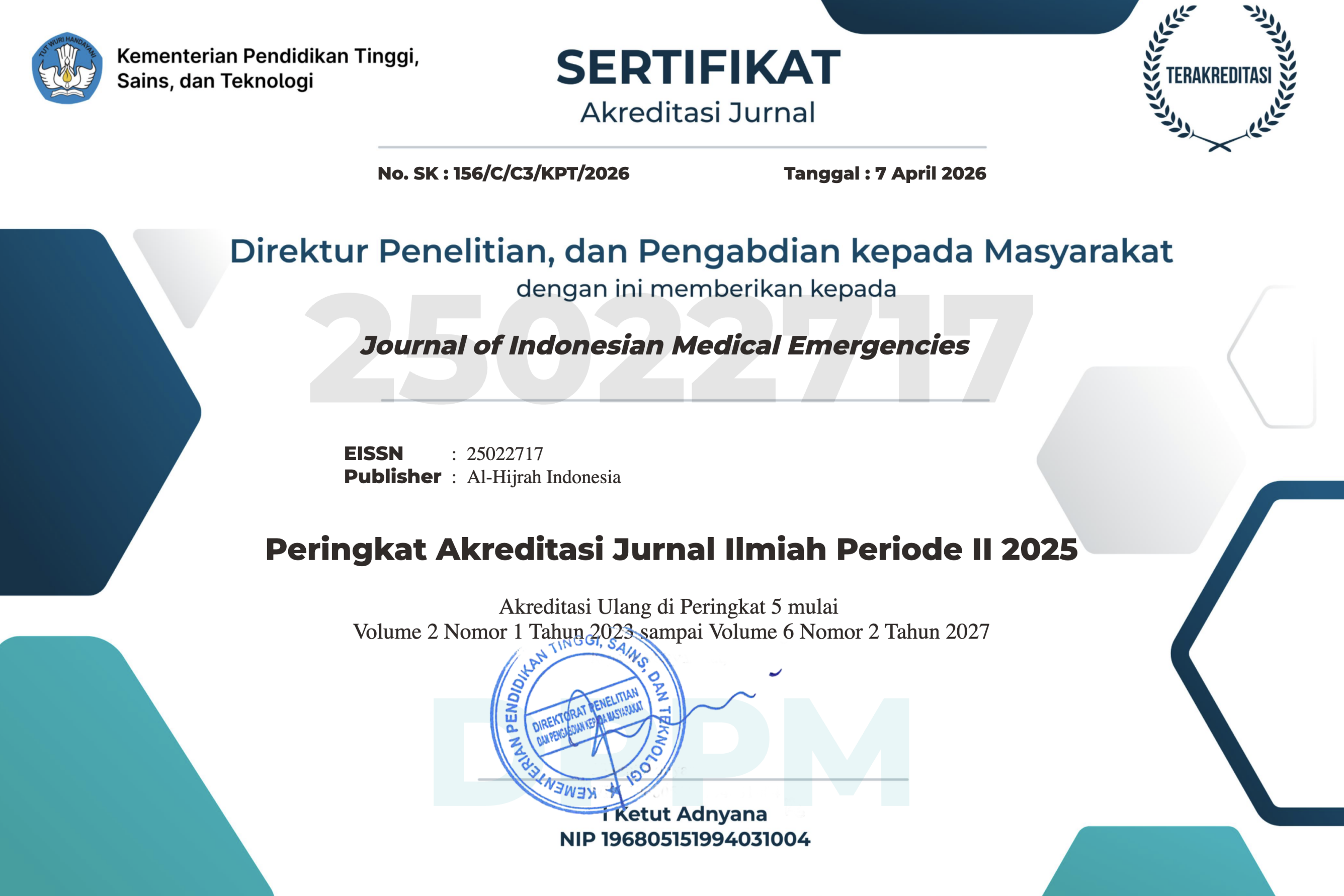
Sinta
JOURNAL TEMPLATE
| JOURNAL TEMPLATE |
Collaboration
issn

DIRECT MESSAGE

PLAGIARISM CHECKER

REFERENCE TOOLS

VISITORS NEW
CROSSREF

Keywords
-
478
-
440
-
403
-
299
-
298