
Bridging Mental Health Gaps in Underserved Communities: A Systematic Review of Digital Technologies and Agronursing as Complementary Interventions
DOI:
https://doi.org/10.58545/jrcnp.v3i2.575Abstract
Background: The integration of digital mental health technologies presents transformative opportunities for addressing service gaps in underserved and resource-limited areas. Purpose: The objective was to identify, evaluate, and summarize peer-reviewed studies that explored both opportunities and challenges associated with digital mental health interventions in rural, remote, and resource-limited settings. Methods: This systematic review synthesizes evidence from 10 peer-reviewed studies to evaluate the effectiveness, accessibility, and challenges of implementing telemedicine, mobile health (mHealth), SMS-based interventions, and digital platforms across diverse global contexts. Result: Findings reveal that digital tools significantly improve access to care by overcoming geographic barriers, reducing stigma, and enabling remote treatment delivery. However, challenges such as inadequate digital infrastructure, data privacy concerns, and limited digital literacy hinder equitable adoption. The study further explores agronursing defined as therapeutic agricultural practices as a complementary, community-centered approach to supporting mental well-being, particularly in rural settings. Conclusions: By combining technological innovation with nature-based therapies, this review highlights pathways toward more inclusive and sustainable mental health service delivery. These insights are critical for policymakers and healthcare providers aiming to address global mental health disparities through context-sensitive solutions.
Keywords:
Agronursing, Digital mental health, mHealth, Rural mental health, TelemedicineDownloads
References
Alam, N., Giacco, D., Siddiqi, B., Singh, S. P., & Jilka, S. (2024). Investigating Awareness and Acceptance of Digital Phenotyping in Dhaka’s Korail Slum: Qualitative Study. JMIR Formative Research.https://doi.org/10.2196/55012
Alqablan, A. K., & Almahboub, M. S. (2022). Developing mental health support programs: Social services programs. International Journal of Health Sciences, 16(3), 1–8. https://doi.org/10.53730/ijhs.v16n3.10234
Batra, M., & Erbas, B. (2025). Extreme Weather, Vulnerable Populations, and Mental Health: The Timely Role of AI Interventions. International Journal of Environmental Research and Public Health, 22(1), 123. https://doi.org/10.3390/ijerph22010123
Chutiyami, M., Cutler, N., Sangon, S., Thaweekoon, T., Nintachan, P., Napa, W., Kraithaworn, P., & River, J. (2025). Community-Engaged Mental Health and Wellbeing Initiatives in Under-Resourced Settings: A Scoping Review of Primary Studies. Journal of Primary Care & Community Health, 16. https://doi.org/10.1177/21501319251234567
de Rosa, C., & Chang, Y.-P. (2024). Using An Mbsr Mobile App For Mental Health: Experiences Of Older Adults In Underserved Communities. Innovation in Aging, 8(Suppl 1), 123. https://doi.org/10.1093/geroni/igae001.123
Herzog, L., Kellmeyer, P., & Wild, V. (2021). Digital behavioral technology, vulnerability and justice: towards an integrated approach. Review of Social Economy, 79(4), 567–590. https://doi.org/10.1080/00346764.2020.1847390
Klein, T., Saleem, M., Kuhn, E., Singh, I., Lahutina, S., Musesengwa, R., Olisaeloka, L., Hendl, T., Kellmeyer, P., Böge, K., Minarik, A., Neubauer, K., Fuhr, D. C., Reinhold, A. S., Osei, F., Köhler, C., Thomas, N., & Spanhel, K. (2024). Interdisciplinary perspectives on digital technologies for global mental health. PLOS Global Public Health, 4(1), e0002567. https://doi.org/10.1371/journal.pgph.0002567
Kozelka, E., Jenkins, J., & Carpenter-Song, E. (2021). Advancing Health Equity in Digital Mental Health: Lessons From Medical Anthropology for Global Mental Health. JMIR Mental Health, 8(6), e27388. https://doi.org/10.2196/27388
Kruzan, K. P., Fitzsimmons-Craft, E. E., Dobias, M. L., Schleider, J., & Pratap, A. (2022). Developing, Deploying, and Evaluating Digital Mental Health Interventions in Spaces of Online Help- and Information-Seeking. Procedia Computer Science, 204, 123–130. https://doi.org/10.1016/j.procs.2022.07.015
Maha, C. C., Kolawole, T. O., & Abdul, S. (2024). Transforming mental health care: Telemedicine as a game-changer for low-income communities in the US and Africa. GSC Advanced Research and Reviews, 18(1), 001–010. https://doi.org/10.30574/gscarr.2024.18.1.0012
Muñoz-Ortega, S., Santamaría-Guayaquil, D., Pluas-Borja, J., Alvarado-Villa, G., Sandoval, V., Alvarado, R., Cherrez-Ojeda, I., & Faytong-Haro, M. (2024). Mental Health in Healthcare Workers Post-COVID-19: A Latin American Review and Insights into Personalized Management Strategies. Journal of Personalized Medicine, 14(2), 123. https://doi.org/10.3390/jpm14020123
Obuobi-Donkor, G., Shalaby, R., Agyapong, B., Nkrumah, S. O., Adu, M., Eboreime, E., Wozney, L., & Agyapong, V. (2025). Impact of a supportive text messaging program (Text4Support) for mitigating psychological problems in patients receiving formal mental health services: A randomized controlled trial. Digital Health, 11. https://doi.org/10.1177/20552076251234567
Obuobi-Donkor, G., Shalaby, R., Eboreime, E., Agyapong, B., Phung, N., Eyben, S., Wells, K., Hilario, C., Dias, R., Jones, C., Brémault-Phillips, S., Zhang, Y., Greenshaw, A., & Agyapong, V. (2023). Text4PTSI: A Promising Supportive Text Messaging Program to Mitigate Psychological Symptoms in Public Safety Personnel. International Journal of Environmental Research and Public Health, 20(5), 4123. https://doi.org/10.3390/ijerph20054123
Owusu, G. P., Dordoye, S. A. Y., Asigbey, S. A. M. A., & Dordoye, E. K. (2025). WhatsApp as a tool for psychiatric crisis management: lessons from a Ghanaian support group. BMC Psychiatry, 25, 123.https://doi.org/10.1186/s12888-025-06400-1
Park, S. Y., Sigmon, C. A. N., & Boeldt, D. L. (2022). A Framework for the Implementation of Digital Mental Health Interventions: The Importance of Feasibility and Acceptability Research. Cureus, 14(7), e26890. https://doi.org/10.7759/cureus.26890
Raphiphatthana, B., Sweet, M., Puszka, S., Whitty, M., Dingwall, K., & Nagel, T. (2019). Evaluation of Electronic Mental Health Implementation in Northern Territory Services Using the Integrated “Promoting Action on Research Implementation in Health Services” Framework: Qualitative Study. JMIR Mental Health, 6(12), e15305. https://doi.org/10.2196/15305
Rojas, G., Martínez, V., Martínez, P., Franco, P., & Jiménez-Molina, Á. (2019). Improving Mental Health Care in Developing Countries Through Digital Technologies: A Mini Narrative Review of the Chilean Case. Frontiers in Public Health, 7, 351. https://doi.org/10.3389/fpubh.2019.00351
Sander, L., Rausch, L., & Baumeister, H. (2016). Effectiveness of Internet-Based Interventions for the Prevention of Mental Disorders: A Systematic Review and Meta-Analysis. JMIR Mental Health, 3(3), e38. https://doi.org/10.2196/mental.6061
Schleider, J., Burnette, J., Widman, L., Hoyt, C. L., & Prinstein, M. (2019). Randomized Trial of a Single-Session Growth Mind-Set Intervention for Rural Adolescents’ Internalizing and Externalizing Problems. Journal of Clinical Child & Adolescent Psychology, 48(5), 691–704. https://doi.org/10.1080/15374416.2018.1534207
Schleider, J., Mullarkey, M. C., Fox, K., Dobias, M. L., Shroff, A., Hart, E. L., & Roulston, C. (2021). A Randomized Trial of Online Single Session Interventions for Adolescent Depression during COVID-19. Journal of Affective Disorders Reports, 6, 100221. https://doi.org/10.1016/j.jadr.2021.100221
Steyn, S., & Slabbert, M. (2023). Self-Guided Smartphone App (Vimbo) for the Reduction of Symptoms of Depression and Anxiety in South African Adults: Pilot Quantitative Single-Arm Study. JMIR Formative Research, 7, e45678. https://doi.org/10.2196/45678
Torous, J., Benson, N. M., Myrick, K., & Eysenbach, G. (2023). Focusing on Digital Research Priorities for Advancing the Access and Quality of Mental Health. JMIR Mental Health, 10, e47573. https://doi.org/10.2196/47573

Downloads
Published
How to Cite
Issue
Section
License
Copyright (c) 2025 Evy Aristawati

This work is licensed under a Creative Commons Attribution-ShareAlike 4.0 International License.




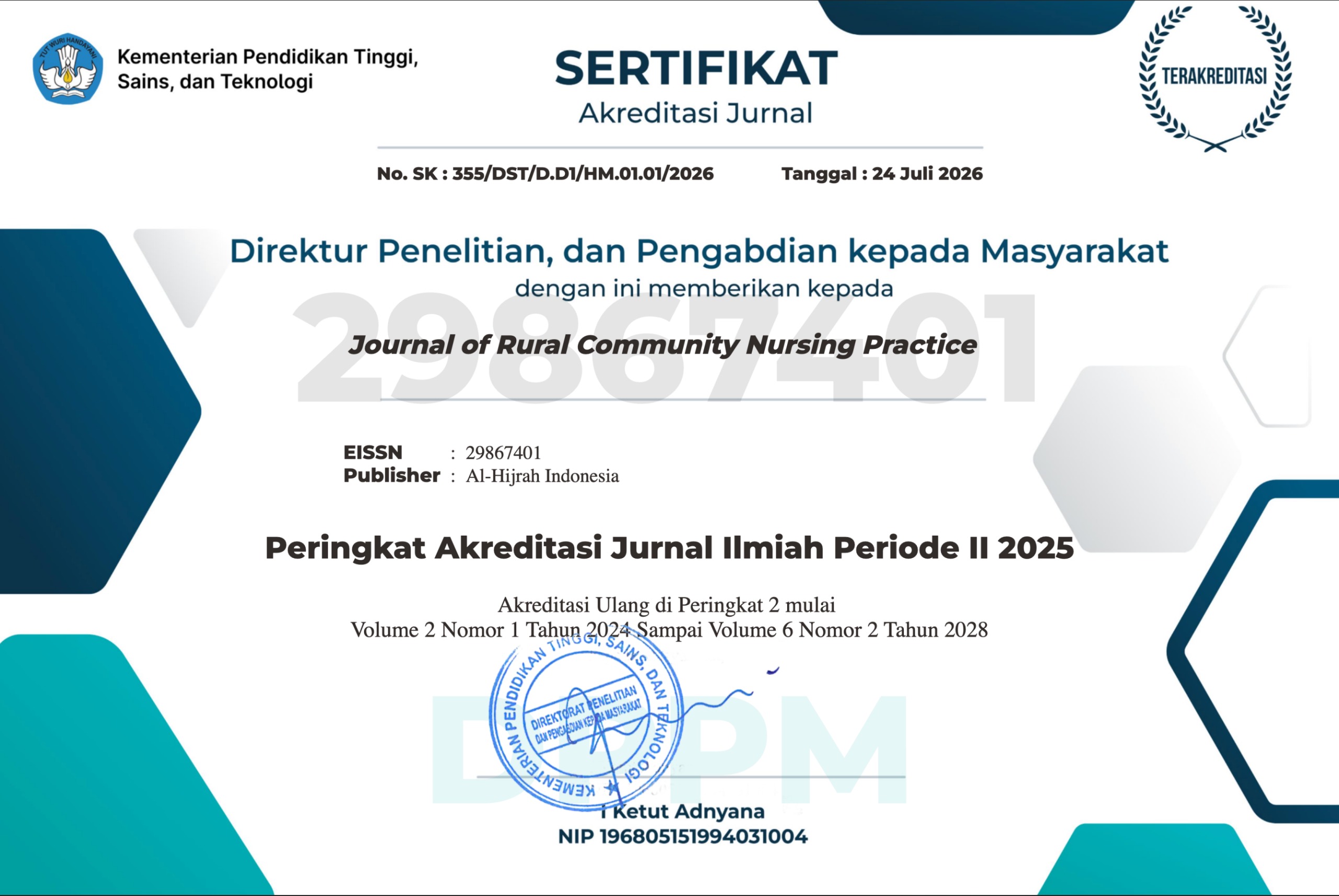
Sinta-2 JRCNP

MY ACCOUNT
ISSN


Collaboration

VISITORS NEW
Scopus Citedness

DIRECT MESSAGE

PLAGIARISM CHECKER

REFERENCE TOOLS

Keywords
Crossmark





-
1042
-
389
-
379
-
271
-
261